
Where Tech Meets Human Potential: Why Fusion Beats Automation Alone
Automation handles speed and scale; people handle judgement, context and ownership. Operations designed around both, instead of replacing one with the other, hold up better over time.
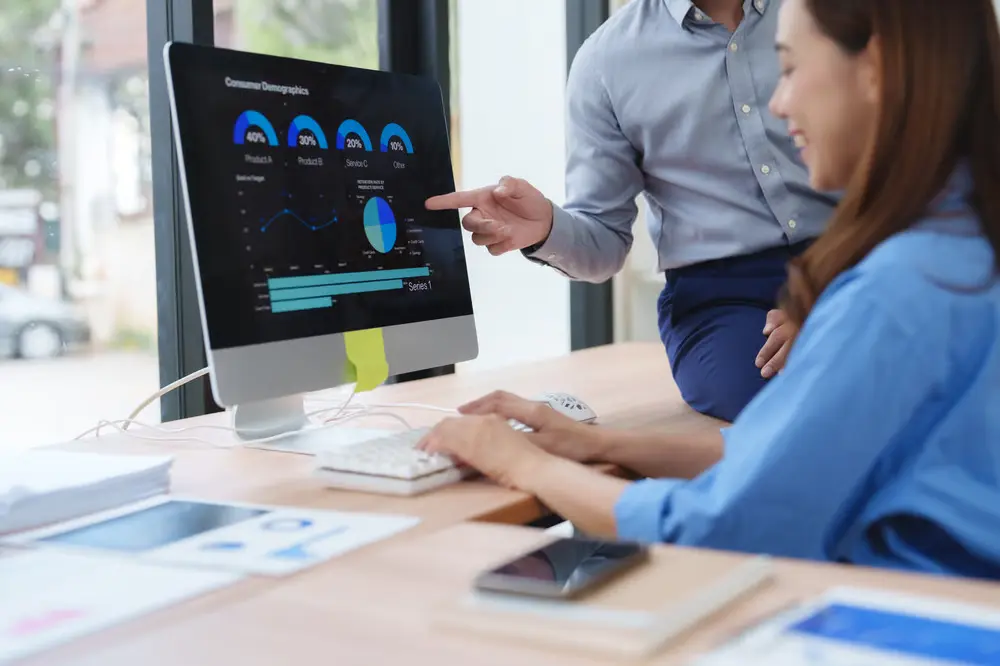
Fusion beats automation alone because almost every business process mixes predictable steps with moments that need judgement. Automation is excellent at the first and unreliable at the second. Fusion means designing the work so that technology handles volume and consistency while people handle context, trade-offs and ownership, with clear handovers between the two.
In many organisations progress is still equated with automation. The belief is simple: replace manual work with algorithms, reduce human involvement, and efficiency will follow. Flit Operations was built on a different premise. Technology should support people and let them do their best work, which builds an advantage that lasts. Flit’s manifesto describes the company as the place “where tech meets human potential.” At a time when much of the market is moving towards total automation, that is a deliberate choice.
The question is not whether automation is valuable. It clearly is. The question is whether replacing human expertise with algorithms actually moves a team forward. Flit’s answer is that it does not, and that the gains come from fusion instead.
What are the limits of automation on its own?
Automation is highly effective at repetitive tasks, at processing large volumes of data and at applying the same rule the same way every time. It reaches its limits when complexity, ambiguity and human judgement come into play.
People do not merely follow processes; they interpret them. They weigh trade-offs, balance competing priorities and deal with the unexpected. No algorithm, however advanced, fully replicates contextual understanding, emotional intelligence or a sense of what matters strategically.
When automation is introduced without a clear understanding of how people actually work, the result is often a rigid system that looks efficient on paper and falls short in practice. The failure modes are familiar:
- Exceptions pile up in a queue that nobody owns.
- The rules encode yesterday’s process, so every change in the business becomes a workaround.
- A wrong rule is applied thousands of times before anyone notices.
- The people accountable for a process stop understanding how it works.
Instead of strengthening teams, systems like these move them away from decisions, and ownership and engagement drop with it.
How is the split between people and technology changing?
The line is shifting, but not towards machines doing everything. In the World Economic Forum’s Future of Jobs Report 2025, employers estimate that 47% of work tasks are currently done mainly by people alone, 22% mainly by technology and 30% by a combination of both. By 2030 they expect the three to be split almost evenly, at roughly a third each.
The growth is not only on the technology side. Work done by people and technology together is expected to be roughly as large a share as either on its own. That combined zone is where fusion happens, and it does not design itself. Someone has to decide which part of a task the system takes, where a person steps in and how information passes between them.
What does fusion look like in practice?
Fusion means designing systems in which automation takes on what it does best, speed, structure and scale, so that people can concentrate on insight, creativity and strategic thinking. The technology supports people rather than controlling them.
A practical way to split the work is to ask four questions of each step in a process:
- Is the input predictable and the rule stable? Automate it, and monitor the results.
- Does the outcome depend on context, a trade-off or a relationship? Keep a person in charge, with technology preparing the information they need.
- Would an error be costly or hard to reverse? Put a human decision point before it takes effect.
- Does the case fall outside known patterns? Route it to a person, and use what they learn to improve the rules.
Across typical back-office functions, that split tends to look like this:
- Finance. Software matches invoices to purchase orders; a person resolves a disputed payment with a long-standing supplier.
- Compliance. Software screens documents for specific clauses; a person decides what an unusual clause means for the business.
- Procurement and logistics. Software tracks deliveries and flags delays; a person deals with a supplier who keeps missing dates.
- Front office. Software routes and answers routine questions; a person takes the complaint that has a history behind it.
In each case the technology removes the repetitive load, and the person spends their time where judgement makes the difference. Choosing the order in which to design these decisions is covered in technology in the loop.
Why does fusion keep people engaged?
Fusion is not only more reliable. It also tends to produce better work for the people doing it. The OECD surveyed over 2,000 employers and 5,300 workers in the finance and manufacturing sectors of seven OECD countries in 2022 for its Employment Outlook 2023. Nearly two-thirds (63%) of workers using AI said it had improved their enjoyment at work, because it took over dangerous or tedious tasks and let them focus on more complex and interesting ones.
The same research found that workers using AI were more likely to report better performance and working conditions when their employer had consulted workers or their representatives about adopting the technology. Designing with people, instead of around them, changes how the technology is received and how well it is used.
This is the practical case for fusion. Automation introduced around people tends to reduce ownership. Automation designed with them gives them more interesting work and keeps the judgement where it belongs.
How Flit Operations designs for fusion
Flit Operations deliberately rejects the idea that technology should replace people. Its solutions are designed to integrate technology and human expertise, so that the resulting systems are efficient and resilient, automated yet aligned with how the business really works. The thinking behind this is part of who Flit is, and it applies whether the work is finance, compliance or the daily processes covered by Flit’s front and back office services.
Fusion is also what separates a solution that lasts from one that is merely fast, a theme taken further in beyond efficiency: what defines a next-generation business solution.
In the end the strongest driver of progress is not technology itself but the way people use it together. If you would like to look at where automation and people should meet in your own operations, a 30-minute call is a good place to begin.
Frequently asked questions
What is the difference between automation and augmentation?
Automation hands a task to technology so it runs without a person. Augmentation, or fusion, has technology and people work on the same task, with technology taking the repetitive part and the person applying judgement. The World Economic Forum expects work done by this combination to make up roughly a third of all tasks by 2030.
Why does automation alone fall short?
Because most processes include exceptions, trade-offs and situations the rules did not anticipate. Automation without a human role tends to leave exceptions unowned, repeats errors at scale and distances people from the decisions they are accountable for.
How do you decide which tasks to automate?
Automate steps with predictable input and stable rules, and keep a person in charge where the outcome depends on context, a relationship or a costly decision. Cases outside known patterns should go to a person, whose decisions then improve the rules.
Does working with AI make jobs better or worse?
It depends on how it is introduced. In the OECD’s survey of finance and manufacturing, 63% of workers using AI said it improved their enjoyment at work, and workers reported better performance and working conditions where their employer had consulted them about adopting it.
See what we run for clients and what a first process looks like.
Read next

Tell us which process is costing you most
Thirty minutes, nothing to prepare. You describe the process; we tell you honestly whether we are the right team for it.