
The Region That Is Redefining European Outsourcing
Established outsourcing markets are running short of people. Here is how the Western Balkans compares on talent, wages, time zone and cultural fit, and where its limits are.

The Western Balkans is redefining European outsourcing because it still has what many established destinations are running short of: qualified people who are available, close to their clients in time zone and working culture. It does not win on price alone, and it should not try to, because wages are rising there too. It wins on availability and fit, which is what complex outsourcing now depends on.
Organisations that have outsourced to the same locations for a decade are starting to ask whether those locations can still deliver what they originally promised. In many of them, saturation has pushed up costs and thinned the talent pool. This article compares the Western Balkans with those markets point by point, including where the region falls short. For the overall business case, see why the Balkans are becoming Europe’s next operational hub. For the questions a German, Austrian, Swiss or British buyer will ask, see the Western Balkans as an operational hub for DACH and UK companies.
Why are established outsourcing markets under pressure?
Because their labour markets are tight and their costs are rising quickly. In September 2026, Eurostat recorded unemployment of 2.8% in Czechia and 3.4% in Poland, against 6.2% for the EU as a whole (Eurostat, 2026). At those levels nearly everyone who wants a job has one, so a provider can only grow by hiring people away from other employers.
Costs follow. Eurostat estimates that hourly labour costs in Poland rose by 8.8% in 2025 (in national currency), against 4.1% across the EU (Eurostat, 2025). For a buyer, that means paying more each year for people who are harder to keep.
None of this makes those markets poor choices. It means the conditions that made them attractive when they were first chosen have changed, and a buyer is entitled to ask the question again.
How does the Western Balkans compare?
Five points decide whether a location works for operations you care about. Here is how the region stands on each.
Talent availability
This is the clearest difference. In Bosnia and Herzegovina, 173,000 people were unemployed in 2025, a rate of 12.2%, and 13.6% of them held a college, university, master’s or doctoral degree (Agency for Statistics of Bosnia and Herzegovina, 2025). The two sets of figures are measured differently (an annual national survey against a monthly Eurostat estimate), but the gap in availability is plain.
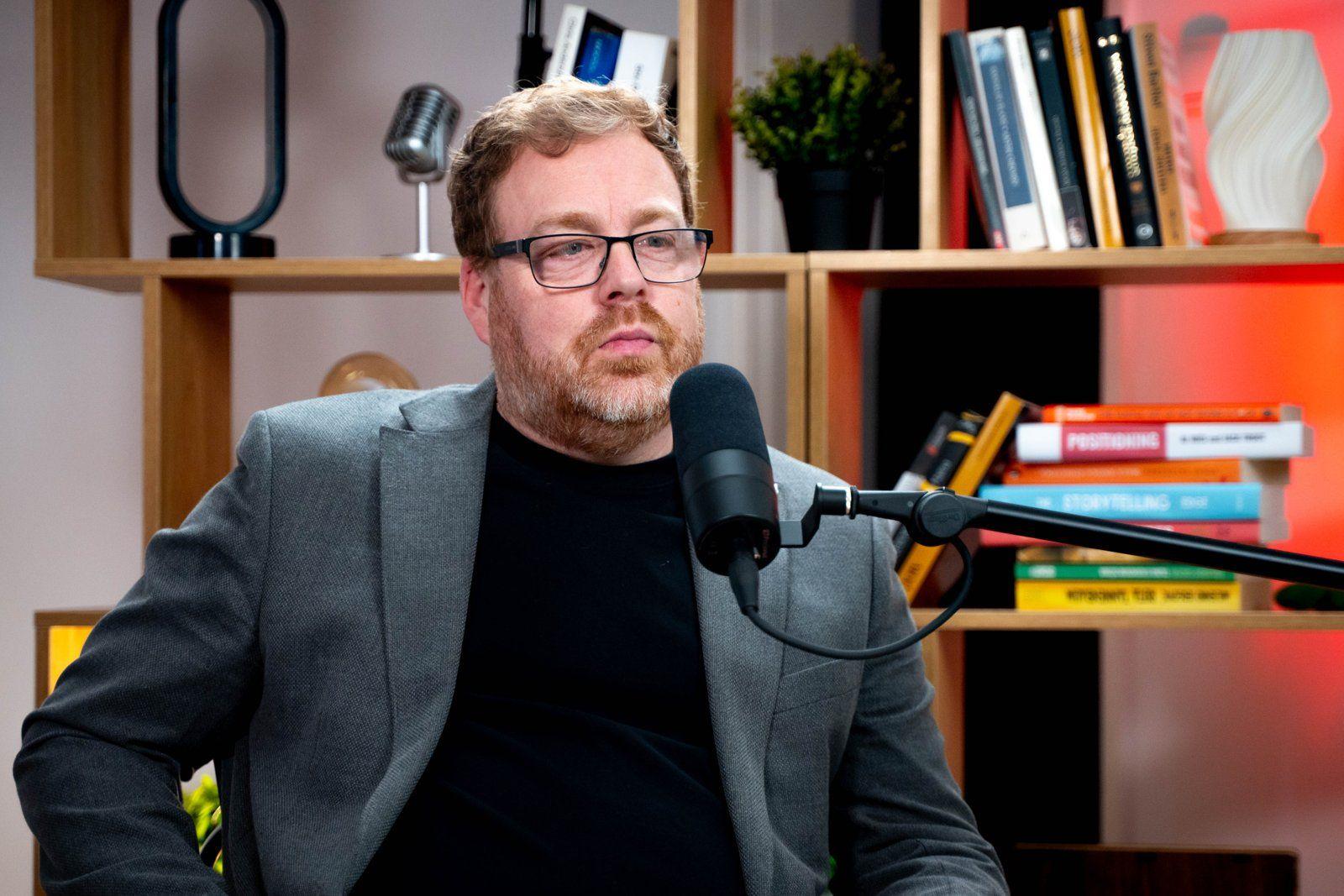
The education behind that pool is the other half of the story. John Callachan, founder and director of Flit Operations and of Go Fusion, has spent 30 years in BPO across 13 locations. He describes both the talent and the timing: “The Western Balkans have done an amazing job within their educational system. Very tech-first, the ecosystems they are building in this area, driving tech-enabled people, is outpacing all of their rivals. BPO is still fairly new here, so it is not saturated, where a lot of other countries in that region are.”
Cost
Here the honest answer needs care. Wages in the region are lower than in Western Europe, but they are rising fast. The average monthly gross wage in Bosnia and Herzegovina’s legal entities was 2,436 KM in 2025, 14.0% more than in 2024 (Agency for Statistics of Bosnia and Herzegovina, 2025).
A decision based only on today’s wage gap rests on a number that is moving. The Western Balkans is not competing on cost arbitrage or raw capacity, and a buyer should not choose it for that. The lower cost is real, but it is the smaller part of the case.
Time zone and travel
Offshore hubs in Asia work several hours ahead of European offices, so collaboration in real time is squeezed into a short overlap. The Western Balkans runs on Central European Time, the same as most of continental Europe, and Munich is about an hour’s flight from Sarajevo. Leadership teams can visit, and working relationships can develop in person rather than only on screen. A partnership then works as something more than a remote transaction.
Cultural alignment
Decades of European influence, multilingual education and a workforce that understands how Western businesses think mean the alignment is there from the start. It does not need to be engineered after the engagement begins. That matters, because cultural misalignment is one of the hardest problems to fix once an engagement is underway. Choosing a region where it is largely absent removes that risk before it becomes a problem.
Readiness for what comes next
The region’s movement towards AI augmentation means the workforce being built there suits what outsourcing requires next, not what it required a decade ago. That means people who check, question and improve what automated tools produce, rather than people who only process volume. The future of BPO explains why AI grows the industry rather than replacing it.
Where does the comparison show limits?
A fair comparison also shows what the region does not yet have. Because BPO is still young there, there are fewer large providers than in mature markets. The choice of partner therefore matters more: look for depth in your function rather than headcount, and for a provider that runs processes rather than supplying people. The difference between a BPO vendor and a BPO partner is a useful checklist.
Most of the region is also outside the EU. Personal data can still be handled lawfully, but the transfer basis, usually the European Commission’s standard contractual clauses, has to be agreed before any data moves. The article for DACH and UK companies linked above covers how that works for a team in Sarajevo.
How should you compare outsourcing locations?
Use the same criteria for every location on your list, and use data for the specific roles you need rather than national headlines:
- Availability of the exact skills. Unemployment and graduate numbers for the profiles you need, not just the national average.
- The wage trend as well as the level. A low wage rising quickly can close the gap faster than you expect.
- Working-hours overlap. How many hours a day both teams can actually talk.
- Travel time for leadership. Whether a visit fits into a day or two.
- The data transfer basis. An adequacy decision, or standard contractual clauses set up properly.
- Provider capacity. Whether the partner can take your work on without spreading its best people too thinly.
Frequently asked questions
How does the Western Balkans compare with established outsourcing markets?
It has more available talent and shares the Central European working day. In established nearshore markets such as Czechia and Poland, unemployment was 2.8% and 3.4% in September 2026, while Bosnia and Herzegovina’s was 12.2% in 2025. Wages are lower but rising quickly, so the region’s advantage is availability and fit rather than cost alone.
Is the Western Balkans outsourcing market saturated?
No. BPO is still fairly new in the region, so qualified people are available and good partners still have capacity. Because the market is young, there are also fewer large providers, so choosing the right partner matters more.
Are wages in the Western Balkans rising?
Yes. In Bosnia and Herzegovina, the average monthly gross wage in legal entities rose by 14.0% in 2025, to 2,436 KM. The level is still well below Western Europe, but a decision based on cost alone rests on a number that is moving.
What are the trade-offs of choosing the Western Balkans?
The BPO market is younger, with fewer large providers, and most countries in the region are outside the EU, so data transfers need a proper legal basis. Both are manageable with a partner that knows your function and a transfer agreement settled in writing.
At Flit Operations, this is the talent base we build around: professionals from across the Western Balkans with the domain expertise and digital fluency that modern outsourcing requires. See our services for the functions we run, or book a 30-minute call to compare your current set-up with what the region offers.
See why the work sits in Sarajevo and what a first process looks like.
Read next

Tell us which process is costing you most
Thirty minutes, nothing to prepare. You describe the process; we tell you honestly whether we are the right team for it.